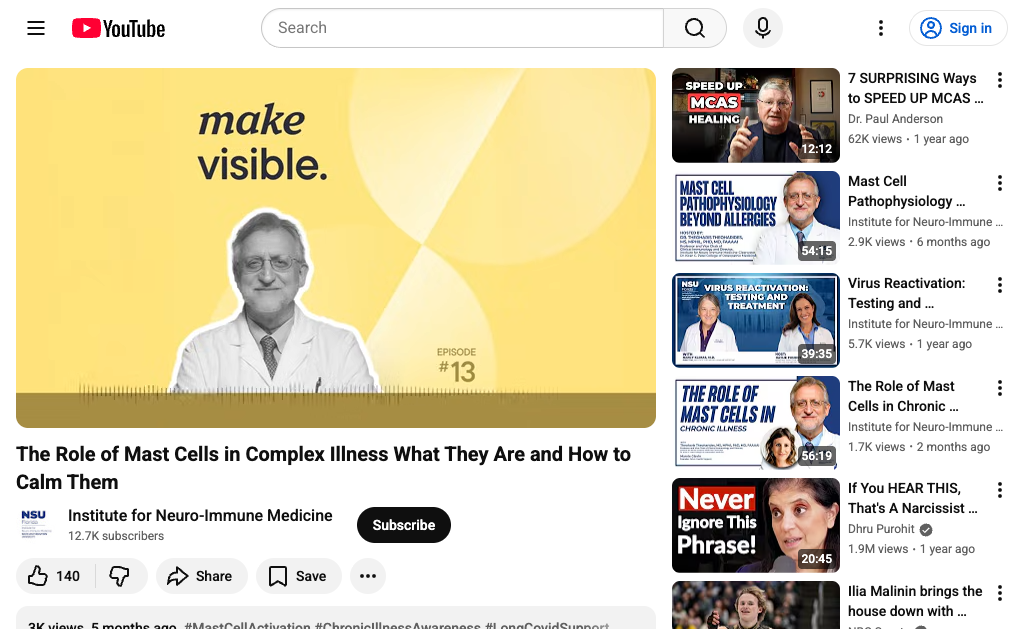
The Role of Mast Cells in Complex Illness What They Are and How to Calm Them
Dr. Theoharis Theoharides explains that mast cells are immune "sentinel" cells located in almost every tissue (skin, gut, lungs, blood vessels, and around nerves and the brain) and can be triggered not just by classic allergens, but also by infections (including COVID), physical trauma, and emotional or psychological stress. When over‑reactive, they release many mediators—histamine, but also tryptase, cytokines, prostaglandins, leukotrienes, and neuroinflammatory molecules—that can affect blood vessels, nerves, and the brain, contributing to symptoms seen in ME/CFS, fibromyalgia, POTS, migraines, long COVID, and other complex illnesses. He emphasizes that this broad mediator profile is why MCAS is hard to diagnose (standard tests often only look at a couple of markers and can miss localized activation, like in the gut or brain) and why antihistamines alone often give only partial benefit. Common features include multi‑system, fluctuating symptoms such as flushing, rashes, GI issues, headaches/migraines, brain fog, fatigue, autonomic symptoms (including POTS‑like tachycardia), and sensitivities to foods, chemicals, or temperature. He discusses natural mast-cell stabilizers such as certain flavonoids (especially luteolin and its more bioavailable derivative tetramethoxyluteolin, including topical use for skin conditions), and the need to reduce triggers and support the body’s own inhibitory pathways, alongside or instead of traditional H1/H2 blockers. The episode highlights the lack of funding and cross‑disciplinary research despite mast cells’ central role in neuroinflammation and complex chronic illness, and describes upcoming work at Nova Southeastern University, including a clinical trial targeting mast‑cell–driven neuroinflammation in long COVID, as a step toward more precise diagnostics and treatments.
Published August 12, 2025