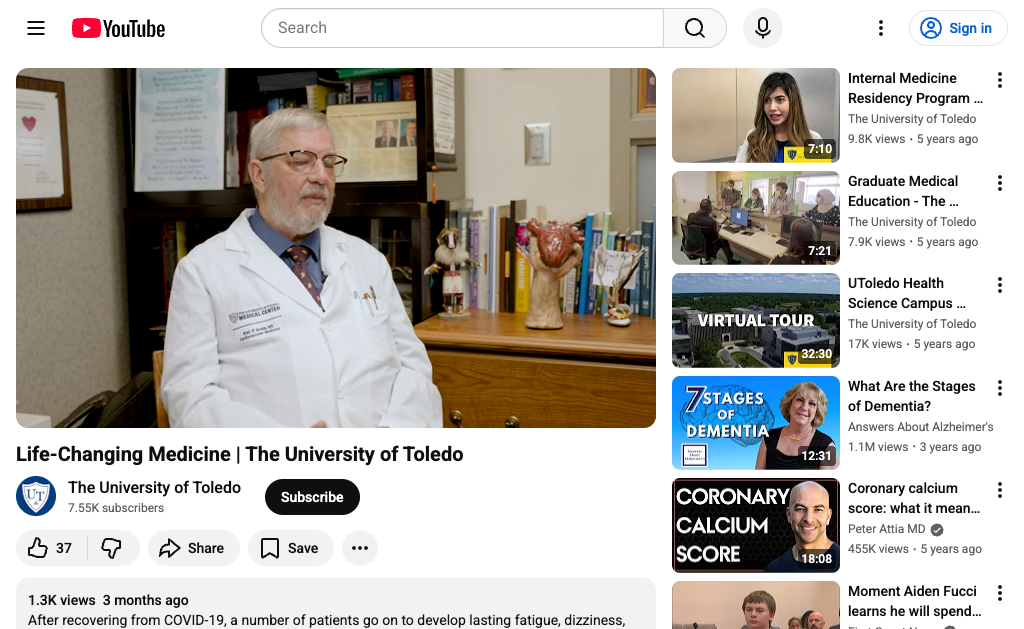
Life-Changing Medicine | The University of Toledo
This resource highlights research from Dr. Blair Grubb at the University of Toledo showing that a significant subset of people with so‑called long COVID symptoms—such as fatigue, dizziness, brain fog, and rapid heart rate when upright—actually meet criteria for postural orthostatic tachycardia syndrome (POTS). His group documented about a five‑fold increase in POTS diagnoses after COVID-19, suggesting the virus can trigger autonomic nervous system dysfunction in people who may previously have been well or only mildly symptomatic. The piece emphasizes that POTS is often underrecognized and misdiagnosed, but that established diagnostic criteria (tilt table or standing tests showing excessive heart rate rise without major blood pressure drop) and treatment strategies (volume expansion, salt, compression, exercise reconditioning, and medications tailored to symptoms) can provide meaningful improvement. For patients, the work offers a clearer explanation and framework for management instead of a vague “long COVID” label; for clinicians, it underscores the importance of screening post‑COVID patients with orthostatic symptoms for POTS and referring to experienced centers when possible.